If you’re in the market for a new pickleball paddle, you’ve likely encountered the terms “thermoformed” and “non-thermoformed” (often called “regular”). This isn’t just marketing jargon; it’s the most significant split in modern paddle manufacturing, and it fundamentally changes how a paddle feels, plays, and performs.
So, what’s the real difference between a thermoformed pickleball paddle vs regular paddle? Let’s break it down.
Pickleball Paddle Manufacturing Process
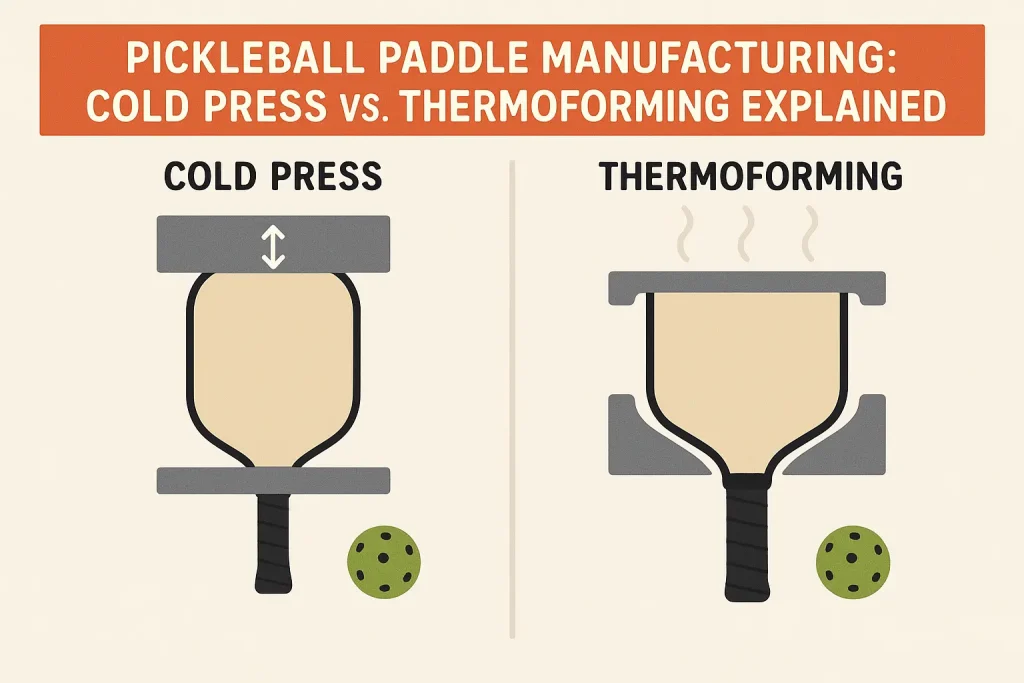
The core difference lies in how the paddle’s face (the hitting surface) is fused to its core.
Non-Thermoformed (Regular Paddle): The traditional method, often called Cold Press Cutting. The paddle face and core are assembled and pressed together at room temperature using adhesives.
Thermoformed Paddle: A modern, advanced process where the paddle face and core are placed in a mold and subjected to high heat and pressure. This fuses the materials into a single, unified structure (often called a “monocoque” construction).
Now, let’s explore what this means for your game.
Cold Press Cutting: The Classic Contender
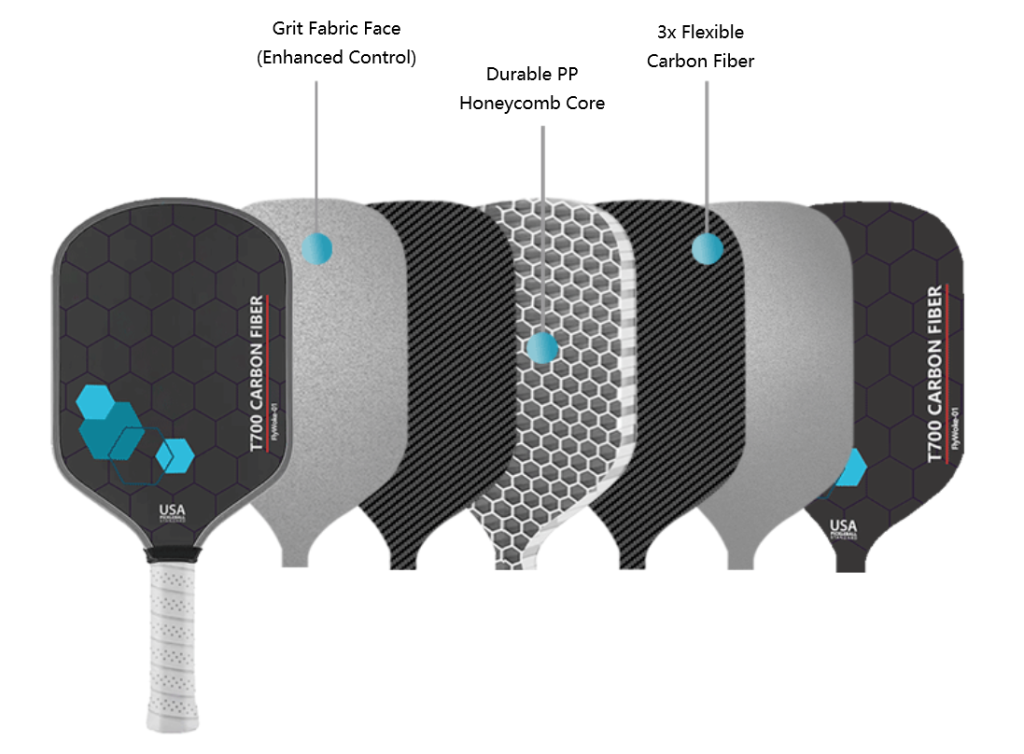
The Cold Press process is a well-established, efficient method for crafting high-quality paddles.
The paddle is assembled and pressed at room temperature.
It typically features anultra-light polymer core with a thickened surface layer, resulting in a moderate overall weight.
Process Name: Cold Press Cutting
Feel: Softer, more flexible feel upon ball impact.
Key Characteristics:
Excellent Control: The defining feature. The construction provides a forgiving feel, allowing for precise dinks and placement shots.
Great Spin Potential: A high surface hardness offers a clear “bite” on the ball for effective spin.
Moderate Power: Power is generated more from player technique than the paddle itself.
Softer Impact: The feel can be easier on the arm for players prone to tennis elbow.
Cost-Effective: Generally has a lower price point and faster production time.
Ideal for: Recreational players, control-focused competitors, and anyone seeking a reliable, well-rounded paddle without a premium price tag.
Thermoforming: The Modern Powerhouse
Thermoforming is a more advanced, heat-intensive process that creates a unified, high-performance structure. It’s the go-to for many professional players and has several sub-categories with distinct tech.
Feel: Stiff, solid, and incredibly responsive with a distinct “pop” sound.
1. Thermoforming Monocoque
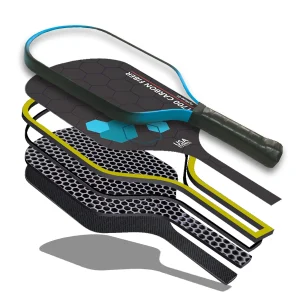
Think of this as the foundation of thermoformed tech. The “monocoque” construction fuses the face and core into a single, seamless unit.
Key Characteristics: This process provides superior stability and durability. Players experience clear, direct feedback on every shot and an enlarged sweet spot for better forgiveness. The result is powerful explosive force and strong, penetrating smashes.
2. Thermoformed Paddle – Generational Core Tech
This is where thermoforming gets really interesting, with evolving core technologies.
Gen 3 Core Tech:

This generation applies advanced honeycomb core structures within the thermoforming process. The result is significantly stronger explosive power and energy output upon ball contact.Gen 4 Core Tech:
An evolution from Gen 3, this features a triple-reinforced core. It not only enhances the honeycomb structure but also fills the critical connection points between the paddle edge and the handle with new materials. This innovation perfectly balances power across the entire face while improving overall control.
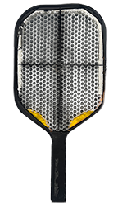
3. Thermoformed Paddle – Advanced Foam Cores
Beyond polymer honeycombs, new foam materials are pushing the boundaries of performance.
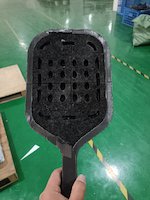
Black TRUFOAM™ Core Tech:
This technology uses a Black EPP foam core. Unlike a traditional PP honeycomb, this closed-cell structure offers greater stability and more direct energy transfer, leading to higher explosive power. It also features high shock absorption for comfort without losing feedback. Many players also note its unique, satisfying sound upon impact.PMI Core Tech:
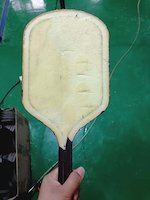
PMI foam is a high-end material known for its incredible resilience. Its closed-cell structure enables an instant rebound, minimizing energy loss for the fastest possible ball speed. The uniform pore distribution ensures stable power even on off-center hits. Crucially, it absorbs over 80% of vibration, drastically reducing arm strain. With a compressive strength over 3 times higher than standard PP honeycomb, it’s incredibly durable and plump, ideal for players who need a power boost.
4. Frameless Thermoforming
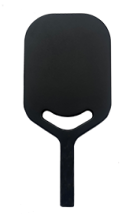
This design focuses on aerodynamics by eliminating the traditional bumper guard frame.
Key Characteristics: It effectively reduces wind resistance for faster, more effortless swings.
Important Note: This design is best for full-print or sandblasted finishes. When used with textured surfaces (like a carbon fiber weave), slight contour imperfections can occur, requiring manual polishing. This leads to higher repair and labor costs. (Note: As of now, the Gen 4 core technology cannot be experimentally made in a frameless design).
Thermoformed vs Non Thermoformed Pickleball Paddles
Here’s a quick comparison to help you decide:
| Feature | Thermoformed Paddle | Non-Thermoformed (Regular) Paddle |
|---|---|---|
| Power | High | Moderate |
| Control | Good (requires more technique) | Excellent |
| Feel | Stiff, Direct, “Poppy” | Softer, Flexible |
| Sweet Spot | Larger, more forgiving | Standard |
| Durability | Very High | High |
| Typical Price | Premium | Mid-Range to Premium |
The Frameless Note: Thermoforming also enables frameless designs, which reduce wind resistance for faster swings. However, these can be more prone to cosmetic edge imperfections and often come at a higher cost.
How to Choose?
For Control & Value: A Cold Press paddle is an excellent, reliable choice.
For Power & a Modern Feel: Start your search with a standard Thermoformed Monocoque paddle.
For Maximum Power & Stability: Look into Gen 3 or Gen 4 Thermoformed paddles.
For Premium Feel, Comfort, and Power: Explore paddles with TRUFOAM™ or PMI Core technology if your budget allows.
For Speed and Aerodynamics: Consider a Frameless Thermoformed model, but be mindful of the potential for cosmetic trade-offs.
Understanding these processes empowers you to look beyond the marketing and select a paddle whose engineering truly matches your playing style. Happy gaming!